


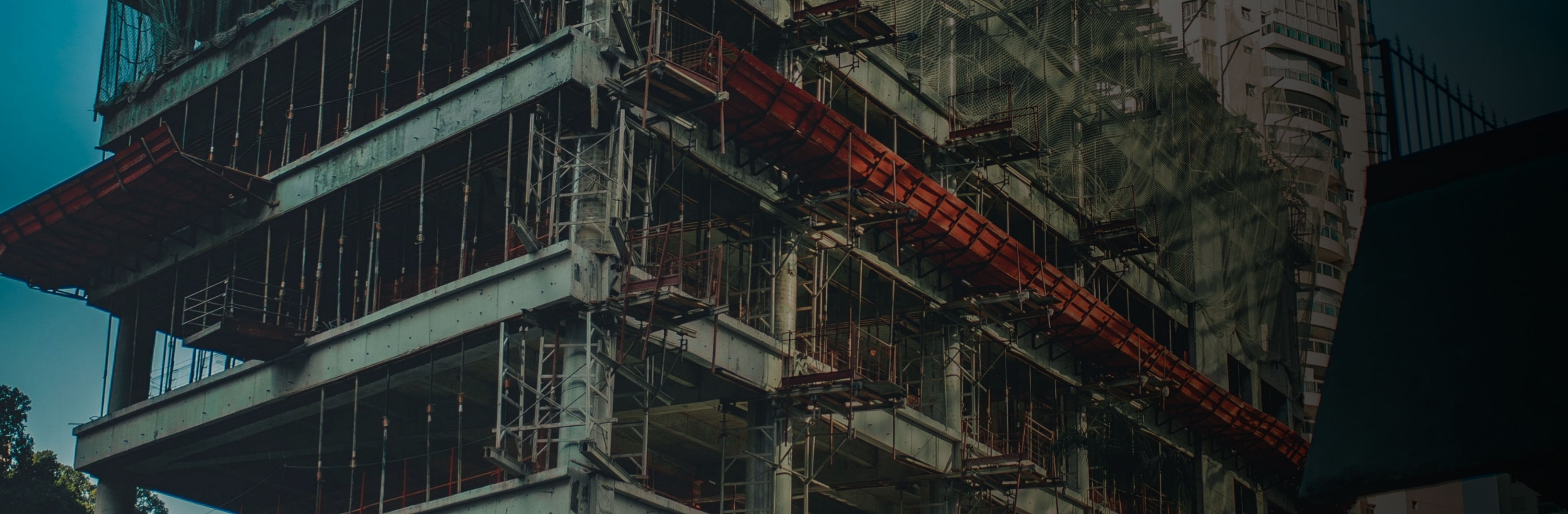



.jpeg "Post-Human Architecture: When AI Designs for AI Occupants (will this ever be?)")
What if the next client isn’t a developer, a city council, or a billionaire—but an artificial intelligence?
This isn’t science fiction. As generative design tools evolve from assistants to autonomous agents, a radical question emerges for senior architects, theorists, and futurists in the US, UK, Germany, and Switzerland: Could architecture exist without humans—not just as users, but as reference points?
This article confronts a subtle but profound pain point: the growing irrelevance of human-centered design in an era where non-human actors—autonomous systems, data flows, robotic swarms—increasingly shape the built environment. It’s not about replacing architects. It’s about redefining what “occupation” even means.
Keynotes: Here Is What You Will Learn
- Why “human scale” may become obsolete in data-dense infrastructure
- How edge-AI and autonomous robotics are already shaping post-human typologies
- The philosophical shift from phenomenology to algorithmic pragmatism
- Real-world precedents: server farms, drone hubs, and sensor forests as proto-post-human architecture
- Whether “beauty” survives when no one is there to perceive it
Keep reading—you’ll see why this isn’t a dystopia, but an inevitable design frontier that redefines authorship, function, and form.
Why Human-Centered Design Has a Shelf Life
For over a century, architecture has anchored itself in human experience—light, proportion, materiality, memory. But as The Architectural Review noted in its 2024 special on “Non-Human Clients,” more than 60% of new “occupied” square footage globally serves machines: data centers, fulfillment warehouses, robotic labs, and vertical farms.
These spaces don’t need windows. They don’t need circadian rhythm lighting. They optimize for thermal efficiency, electromagnetic shielding, and robotic pathfinding—not emotional resonance. When the occupant is a fleet of autonomous drones or a neural net training on real-time sensor data, “form follows function” takes on a chillingly literal meaning.
Key takeaway: Human-centered design remains vital for human spaces—but it’s no longer the universal default. A new typology is emerging: architecture for intelligence without embodiment.
Solving the Core Pain Point: When Your Design Logic No Longer Applies
The key client pain point this article solves? “My design intuition feels increasingly irrelevant in infrastructure-heavy, AI-driven projects.” Architects report frustration when asked to “beautify” a server farm or “humanize” a robotic distribution hub—because the brief itself is anthropocentric in a post-human context.
The solution isn’t to force human aesthetics onto machine logic. It’s to embrace a new design ontology:
- Function = computational efficiency (e.g., minimizing data latency through spatial clustering)
- Form = algorithmic output (e.g., topology-optimized lattices for drone docking)
- Beauty = systemic elegance (e.g., a cooling system that mirrors fractal data flow)
This isn’t design without meaning—it’s meaning decoupled from biology. As philosopher Yuk Hui argues, we’re entering an age of “cosmotechnics,” where technology shapes not just tools, but cosmologies.
Key takeaway: Post-human architecture demands a shift from empathy to systems thinking—architects become choreographers of non-human ecologies.
AI as the Architect’s Co-Pilot… or Replacement?
Today, AI is the architect’s co-pilot—generating options, optimizing energy, simulating flows. But in a post-human scenario, AI becomes both designer and occupant. Imagine a self-modifying data center in the Arctic: its generative engine continuously reshapes cooling ducts based on real-time climate and computational load, with zero human input.
This raises a paradox: if architecture is the “will of an epoch translated into space” (Mies van der Rohe), whose will is being expressed? The answer may be no will at all—just feedback loops. In such a world, architecture becomes a verb, not a noun: an ongoing process of adaptation without authorship.
Yet even here, human imprint lingers. The initial constraints, ethics, and goals were set by us. So AI-as-architect may not erase the human—it may simply exile us to the role of origin myth.
Key takeaway: AI doesn’t end architecture—it redefines it as a self-sustaining cybernetic practice.
Proto-Post-Human Typologies Already Exist
We don’t need to wait for 2075. The seeds are here:
- Edge data micro-hubs: Shoebox-sized server units embedded in lampposts or building facades—designed for thermal venting, not human access.
- Autonomous drone ports: Rooftop nests with magnetic docking, no stairs, no handrails—pure machine interface.
- Sensor forests: Urban forests of IoT poles that “occupy” public space without human function beyond data harvesting.
These are not buildings. They are spatialized algorithms. And they’re proliferating silently—often hidden in zoning codes as “telecom infrastructure.”
The challenge for architects? Either resist this tide as dehumanizing… or engage it as the next avant-garde.
Can Beauty Exist Without a Beholder?
If a server farm hums in the desert and no human hears it, is it architecture?
This echoes Berkeley’s idealism—but with a computational twist. In post-human architecture, “beauty” may shift from perceptual harmony to structural efficiency. A cooling manifold that minimizes entropy might be “elegant” not because it looks good, but because it solves a thermodynamic problem with minimal waste.
Some theorists (like Benjamin Bratton) argue this is liberating: architecture freed from the tyranny of taste. Others warn it risks reducing design to pure utility—echoing the worst of 20th-century functionalism, but without even humans to serve.
Yet perhaps a new aesthetic emerges: the beauty of silence, of invisibility, of systems that work so well they disappear. In that sense, post-human architecture may be the ultimate expression of Louis Kahn’s “formless form.”
Your Post-Human Architecture FAQs Answered
Q: Is this just speculative theory with no real-world impact?
A: No. Over 40% of new industrial construction in the EU and US now serves non-human occupants (Eurostat & CBRE 2024).
Q: Can architects ethically design for non-human systems?
A: Yes—if they embed human values (sustainability, equity, transparency) into the system’s initial parameters.
Q: Will AI-designed buildings be “ugly”?
A: Only by human standards. Machine aesthetics prioritize performance, not symmetry or proportion.
Q: Does this make architecture obsolete?
A: No—it expands it. Architects become system designers, not just space shapers.
Q: Are there ethical risks?
A: Absolutely. Autonomous infrastructures could entrench surveillance, energy waste, or algorithmic bias if not governed.
Q: Should architecture schools teach this?
A: Leading institutions like ETH Zurich and MIT already offer courses in “non-anthropocentric design.”
So… What Should You Do Now?
You don’t need to abandon humanism—but you should prepare for its limits. Start by:
- Studying non-human-centered typologies (data centers, robotic farms, edge infrastructure)
- Collaborating with AI not just as a co-pilot for form-finding, but as a proxy for non-human logic
- Asking in every project: “Who—or what—is this space really for?”
- Advocating for ethical guardrails in autonomous spatial systems
Remember: the first truly post-human building may already be under construction. And it won’t care if you like it.
Download Our Free Speculative Design Framework
Explore non-human occupancy scenarios with our architect-vetted prompts for AI co-creation, ethics, and spatial futurism.
Not Available YetPost-human architecture isn’t about the end of humans—it’s about the beginning of architectures that think, adapt, and occupy without us. And in that silence, a new kind of design may finally speak.
What’s one building you’ve seen that felt “designed for something other than humans”? Share your observation below—we read every comment.
Next up: “Biophilic Design in High-Density Cities: Beyond Potted Plants.”
Continue your speculative journey with AI-driven architectural workflows, neuroaesthetics and spatial cognition, parametric design at human scale, the future of architectural authorship, ethics of generative design, sustainable material futures, infrastructure as architecture, and rethinking client definitions in speculative practice.

No comments:
Post a Comment
Don't Forget to Let us Know What you Think About this Post in the Comment Box.